“The New Jersey Comeback Has Begun”
Trenton, New Jersey
January 17, 2012
Lt. Governor Guadagno, Madam Speaker, Mr. President, Members of the 215th Legislature, Members of our Congressional Delegation, Members of the Supreme Court, our former governors and the people of the State of New Jersey:
This has been a difficult week for all of us who work in this State House and are committed to public service. Over one week ago, we lost our friend Alex DeCroce. During this week, we have celebrated his life in this chamber, at his wake, at his funeral mass and, undoubtedly in the homes of the thousands of New Jerseyans whose lives he touched during his 23 years of service in the Assembly. We cap that week of recognition today by flying all flags on government buildings across our State at half staff in Alex’s honor. Now, if you will all please join me in a moment of silence to honor Alex’s life and legacy.
Knowing Alex as well as I did over the last 19 years, I know he would tell me, “Enough of this now, Chris. Let’s get back to work.” That is exactly what I intend to do.
It is a pleasure to return to this chamber to report to you on the State of our State.
Today, I am proud to report that the New Jersey Comeback has begun.
How do we know it has begun? Just look around you.
In the last two years, we have come together to address the mess that was our budget. The decline, deficits, and departures that plagued our State just two years ago have been reversed. The budget is balanced. Our unemployment rate is no longer going up, it is coming down. Job growth has been restored – in the private sector, where we want it. New Jersey is back.
We have restrained the growth of property taxes. We have put our pensions on a more stable and sustainable footing. And in doing all this, we have restored confidence and pride in New Jersey.
The New Jersey Comeback is taking place in large part because of what we have done in this chamber. Together, we have done something that Trenton hasn’t seen in a very long time. We worked together. We achieved compromise. And we put New Jersey and its people first.
For New Jersey, the corner has been turned. Today, the debate is not about who to blame for our failures, it is how to build on our successes.
It is no longer about how to deal with devastating decline; it is now about how to push New Jersey even further ahead. To be better than we thought we could be.
In these last two years New Jersey has set the standard for governance in America: be honest; don’t mince words; and do the big and difficult things. Not only because it is right, but because it lays the foundation for future greatness. Now it’s our job to finish the task.
***
Job one is the economy.
Consider where we were just two years ago.
When I raised my hand to take the oath of office then, I could not say with confidence that the State would meet its payroll within two months. Imagine that, New Jersey unable to meet its payroll. That was the gravity of the mess we were left to deal with due to the mismanagement which reigned in this town before our arrival. Our deficit for that fiscal year, already more than half over, was more than two billion dollars. The budget problems for the next year, fiscal year 2011, was a record deficit of $11 billion.
The solution was not easy, but it was also not complicated. We had spent too much as a state. We had lived beyond our means. And by trying to tax their way out of it, previous governors and legislators had left New Jersey in 50th place – dead last among the states – in the total tax burden it placed on our citizens.
We had the highest tax rate in the nation, the highest unemployment rate in a quarter century, and the largest budget deficit per person of any state in the nation.
So step one was to stop the bleeding – by stopping the spending. We cut 375 programs in that first fiscal year, saved two billion dollars for the taxpayers, and brought Jon Corzine’s budget into balance. Next, with your help, we enacted a budget that imposed discipline, in the form of another cut in spending, for the second year in a row: cutting spending for each and every department of state government.
That was tough medicine – but it was the beginning of better health. Last year, because we took that medicine, we were strong enough to reduce business taxes and improve New Jersey’s climate for job creation. I want to thank this legislature for joining me in recognizing that – for New Jersey to grow private sector jobs again – we must reduce the tax burden on our citizens and our businesses.
Step two was controlling property taxes. As everyone in New Jersey already knows, they had risen 70% in the ten years before I became governor. Rising property taxes were driving people out of this state.
And so we joined together – and again I thank this legislature and in particular your leaders, Senate President Sweeney and Speaker Oliver – to cap property tax growth at no more than 2% a year. And we put the same 2% cap on the interest arbitration awards that were giving rise to higher taxes.
We must never forget that the root cause of rising property taxes is always excessive government spending. As with all problems, you must get to that root cause – and together, we did it.
And here’s the good news: it is working.
Last week, the state’s largest newspaper announced the results of its comprehensive study of property taxes in New Jersey. The headline said it all: “At long last, tax relief.”
Step three was to get a grip on our long-term liabilities. Our pension system was $54 billion in debt at the start of 2011, and scheduled to be underwater by $180 billion in three short decades without a change in course. It was imperative that we save these pensions for our middle class and at the same time lift the burden off of our taxpayers created by the unrealistic promises made by career politicians.
And so we confronted the obvious, negotiated a solution and saved taxpayers over $120 billion dollars. The pensions of every state worker, of every teacher, and of every retired municipal employee are more secure today. By the tough choices we made together, we saved their pensions.
Again, the solutions were not easy, and not always popular, but they were also not complicated. We had to raise the retirement age a bit; we had to get a grip on the effect of COLAs; we had to make sure that the contributions of employees were fair, and that the state kicked in also. But by taking these steps we made a big dent in the problem.
At the same time, we had a public employee health system that was $67 billion in deficit in January of 2011. To right this wrong, we relied on two simple principles: we should give employees more choice and everyone must pay their fair share. We, once again, compromised with each other to right a failing system and, in the process made political history in New Jersey. We came together. We took on the special interests. We put our citizens first.
At the time, the New York Post said we had pulled off “something of a miracle” in pension reform. But it wasn’t magic. In a country dominated in so many places by partisan bickering, we just had to be honest and realistic about the math, and grown-up about the answers.
And the good news is this – the people of New Jersey can take it. We’ve shown the rest of the country that we are Jersey strong. Today, the results of that Jersey strength and that Jersey attitude are beginning to show.
Since our administration came into office, New Jersey has added over 60,000 new private sector jobs. Remember, in 2009, the state lost 117,000 jobs. According to Rutgers University economist Joseph Seneca, 2011 was the best private sector job growth year in New Jersey since 2000. 60,000 new private sector jobs since we took office. The best job growth year in more than 11 years. Here is my promise to the people of New Jersey: We will keep the momentum going. I will not permit anyone to re-impose the tax raising, overspending, irresponsible ways of our past which led to our dark decade of joblessness in New Jersey. Stand strong with me and I will stand up for you. We are going in the right direction and I will oppose any move to return us to the despair those policies brought to New Jersey and its citizens.
The new direction is clear. We have changed the business environment in this state and, as a result, we are changing the jobs environment.
From Asurion (which established its regional headquarters in Bridgewater), to Allergan (which picked New Jersey for its northeast research and development center), we have been able to attract new jobs from around the country to New Jersey.
From Watson Pharmaceuticals (which moved to Parsippany), to Pinnacle Foods (which moved to Cherry Hill), employers are beginning to understand that New Jersey is once again a friendly state for businesses and jobs – a great place to work and raise a family.
And it’s not just around the country. People are recognizing the New Jersey Comeback all around the world… Bayer put its North American headquarters in Morris County, Novo Nordisk in Middlesex County, and LG Electronics in Bergen County.
We have begun this turnaround in the face of strong national headwinds.
Across our country, growth is still anemic. There has been no national solution to our debt and deficit problem, no catalyst for growth, no leadership on the economy.
The politics of envy have overtaken the imperative of opportunity. Our economy suffers while Washington politicians – in both parties – fiddle. America’s position of strength and leadership around the world deteriorates while our leaders bicker and blame.
Over the last two years New Jersey did the exact opposite. We achieved results because we did it together.
Over the last two years we’ve said – let’s put aside our differences on some issues so we’re able to work together on others.
Now it doesn’t mean we didn’t shout at each other. It doesn’t mean we didn’t get angry. You may even recall that even some of my friends had some very colorful nicknames for me.
Now, that anger is natural, that passion is good, but we have shown that on the important issues, on the really big things, we can still come together to lead the people of New Jersey to a better outcome.
We’ve shown that it’s possible to hold fast to key principles, but still reach compromise.
We’ve shown New Jersey, and the nation that there is a better way. That divided government can work; that Democrats and Republicans working together is possible. And in fact it’s necessary.
Two years ago at my inaugural, I asked Senator Sweeney and Speaker Oliver to join me in a handshake to demonstrate our commitment to working together – sticking to our principles, but finding common ground for the good of the people. Our handshake that day was a symbol, because it could be nothing more than that.
Back then, we had nothing to show the people but our good faith and the promise for tomorrow. Today, no symbolic handshake is needed. Thankfully, we have shown through our deeds that we are willing to work together. Substance over form. Accomplishments over partisanship. Thank you, Steve. Thank you, Sheila.
So in this year, in 2012, let us continue to show the state and the nation what is possible. Let New Jersey continue to set the example. Let New Jersey continue to lead the way.
And let us do it together.
***
Over the last two years we’ve had to make some tough choices. It was important to do what was difficult and what was necessary to get New Jersey out of its hole. But, because of these hard decisions, the shared sacrifice and because we stuck to our discipline we can now focus on our priorities.
We will have to continue to hold the line on spending. And I guarantee you this: the budget I submit, and any budget I will ultimately sign into law in June, will be truly balanced.
But we have been working to get to this moment. To finally have New Jersey right side up, so we can focus on the big things. To challenge ourselves to be better. To strive for greatness. To ensure that every New Jerseyan is given the opportunity to have the life they want.
So in my budget, I will fulfill a promise I made to all the people of New Jersey in 2009. Real relief from the heavy income tax burden that has strangled our families and forced many to move away.
I propose to reduce income tax rates for each and every New Jerseyan. In every tax bracket. By 10% across the board.
I also propose to fully restore the earned income tax credit for New Jersey’s working poor, which we were forced to cut during the dark days of 2010, when growth was gone and we had no money. Understand what this means – every New Jerseyan will get a cut in taxes. The working poor. The struggling middle class. The new college graduates getting their first job. The senior citizens who have already retired. The single mom. The job creators. The parents trying to afford to send their son or daughter to college.
Everyone made the sacrifice. Everyone will share in the benefit.
This will send a loud signal to New Jerseyans and would-be New Jerseyans, to families here now and families who have left, to businesses and job creators thinking of coming here and those who have struggled to stay: New Jersey is once again a place to plan your future, raise your family, grow your business and someday retire. The New Jersey Comeback has begun.
Let’s be under no illusions – our job in turning New Jersey around is far from finished. We have improved our tax climate – but, there is much work to be done.
For make no mistake – we are in a competition. A competition for jobs – among countries, yes, but also among states. In the last decade, two-thirds of all companies which moved jobs to a new location did not move to other countries – they moved from one state to another.
Here in our region, our most direct competitors are making very different choices. In Connecticut, the governor has raised income tax rates on top earners and job creators. And New York last month enacted legislation to do the same.
Other big states are also raising taxes. California’s governor has proposed to raise the top rate – already among the highest in the nation, by up to two percentage points. Illinois has already adopted a law to raise all income taxes by 67%.
In this environment, the best way to compete is to show a different direction. Let others choose tax increases. We choose responsible tax cuts to give our overburdened citizens real relief. And to help New Jersey grow.
Now some will argue, “Wait a minute: New York only raised taxes on the rich. Why not adopt Governor Cuomo’s package for New Jersey?”
Here are the facts. If we enacted the exact same income tax rates put into law by New York last month, every person earning below $100,000 a year would face a tax increase – of anywhere from 150 to 200%. And, by the way, those earning a million dollars would get a tax cut. Is that what we want? Is that fairness?
I don’t think so. An across the board tax cut is fair – every New Jersey taxpayer will benefit. Every New Jerseyan’s rates will go down. Every New Jerseyan will see relief.
This is exactly what I was talking about when I took office; that the tough choices would lead to the right ones.
Today, because we have put our fiscal house in order we can budget for our priorities and give tax relief to all of our people. Tax relief that will lead to better lives for our citizens and more jobs for our state.
Job number two is to reform our education system – to strengthen our schools.
Over the course of the last year, since outlining my proposals from this podium, I have worked with this legislature – on a bipartisan basis – to put in front of you a package of bills that will address the biggest challenges facing public education in New Jersey. We have had a year to debate, discuss and deliberate.
Now, in 2012, it is time to act.
New Jersey, in so many ways, is blessed. The majority of our schoolchildren continue to perform well, above most other states, on national student assessment tests. New Jersey has so many great teachers producing so many great students.
Too many in the educational establishment, however, use that very real success as a camouflage for abject failure elsewhere in New Jersey. To use the success of others as an excuse to block change for those we are failing is not only wrong, it is immoral. Too many of our schools are failing our children, and they have been failing for far too long.
We live in a time when educational attainment and economic success are correlated as never before. That is a good thing. It means that for this generation of Americans, what you can achieve will be driven not by who you know, but by what you know.
You need to look only at the recent Harvard/Columbia study of 2.5 million students over 20 years in America. Its independent research supports what I told you from my heart, from this podium, one year ago.
Great teachers have a more significant impact on their student’s future success than average ones. Even more importantly, average teachers have an even greater effect on their students when they replace underperforming teachers. Research that confirms our own common sense.
Tenure reform will lead to even greater student achievement because replacing underperforming teachers with even an average teacher raises each classroom’s lifetime earnings by over a quarter of a million dollars. Let’s act on real tenure reform now. Let’s replace despair with hope in every classroom in New Jersey.
Because I believe it is obscene to be satisfied. When the chance for a life filled with hope and opportunity is determined not by how hard you are willing to work but by where you happen to live. Not by your intelligence, but by your zip code.
Let’s face it: more money does not necessarily lead to a better education. Today, in Newark, we spend $23,000 per student for instruction and services. But only 23% of ninth graders who enter high school this year will receive high school diplomas in four years. Asbury Park is similar: per pupil costs, at almost $30,000 a year, are nearly 75% above the state average. But the dropout rate is almost 10 times the state average. And math S.A.T. scores lag the state average by 180 points.
It is time to admit that the Supreme Court’s grand experiment with New Jersey children is a failure. 63% of state aid over the years has gone to the Abbott Districts and the schools are still predominantly failing.
What we’ve been doing isn’t working for children in failing districts, it is unfair to the other 557 school districts and to our state’s taxpayers, who spend more per pupil than almost any state in America.
Basic human decency and simple common sense say it is time for a different and better approach.
The tools to give our children and their parents who are confronted with failing schools the chance for a better outcome are before you.
They are embodied in bills which are bipartisan in nature and consistent with the reform advocated by President Obama, Education Secretary Duncan and most recently by New York State Governor Andrew Cuomo.
My proposals reflect the input the administration has received at hundreds of meetings with educators, parents and professionals around the state. They are supported by independent research done at Harvard and Columbia.
Most importantly, they reflect the intention we should all have: to put children first.
The momentum to put children first began last week when you passed, and I traveled to Camden to sign, the Urban Hope Act. This new law will allow school districts in Newark, Camden and Trenton to partner with experts in the private sector to build and operate renaissance schools in these districts so in need of change.
We have given some of our urban schools a signal that hope is on the way. I want to thank Senator Donald Norcross and Mayor Dana Redd for their bi-partisan support of this idea. You and I both know that this is a good start, but only a start. There is much more work to do.
Here is what I propose:
- First, reform tenure – by measuring teacher effectiveness, both with professional observation, and objective, quantifiable measures of student achievement – and then by giving tenure to those with strong evaluations, and taking it away from those whose ratings are unacceptably weak. We cannot ask parents to accept failure in teachers when their children’s lives hang in the balance;
- Second, if layoffs are necessary remove the least effective teachers instead of just the most junior ones. It is time to end the system of “last in, first out,” which protects some of the worst and penalizes some of the best;
- Third, pay teachers more when they are assigned to a failing school or to teach a difficult subject. Compensation should be designed to attract and retain effective teachers where we need them most;
- Fourth, end forced placements. Teachers should not be assigned to schools without the mutual consent of the teacher and the principal. If an acceptable placement can’t be found in 12 months, the school district should have the right to place the teacher on permanent unpaid leave;
- Fifth, we should reform our process for authorizing charter schools to attract the best operators to New Jersey, to streamline the process for the best performers, to focus on our failing school districts and to encourage innovation. We must give parents and children in failing schools an alternative; and
- Last, and perhaps most importantly, establish tax credits to provide scholarships for low income students in the worst-performing schools in the state to enable them to attend a better school, either out of the district or a private school. Opportunity should not be offered to only those in an excellent school district or with parents who have the money to release their children from the prison that is a failing school. Let’s pass the opportunity scholarship act now.
These are not radical reforms; they are common sense. They are not rash; they are long overdue. And they are not luxuries which can afford to languish for another six months or another year; they are essential for New Jersey’s success.
I have a message that is not from me, but from the single mom in Newark, and the struggling parents in Camden, as well as the employers in our state: education reform has waited long enough.
***
New Jersey is one of America’s most diverse states.
This means we have diverse problems, but also diverse opportunities. It means we must build the skills and improve the opportunities for many types of people, from all backgrounds and all walks of life. And it means we must work in multiple ways to improve the quality of life for everyone.
Creating jobs and fixing the schools are probably the two most important ways to do that, but there are other steps we can take as well to improve the quality of life in New Jersey.
This leads me to job number three. We need to reclaim our inner cities, respond to underserved regions, and engage our most vulnerable citizens.
A few months ago, I hosted a town hall meeting in Union City with Senator Brian Stack. A woman from Newark was there. A mother. A neighbor. A concerned citizen.
That day, she asked me a very direct question – and actually, I believe it was a question for all of us.
She said, “I just wonder if the amount of violence, the amount of shootings, the amount of murders that take place in the City of Newark. I just wonder sometimes if it bothers you like it bothers us. Particularly the mothers who have lost their children.”
And she ended her question with a plea. ‘Help us,’ she said, ‘Help us.’ Well, that woman was Cassandra Dock. And I met with her and her neighbors. She is here in this chamber today.
I ask all of you to send a message that in New Jersey we are creating a place where everyone is given the opportunity to live the life they want. I ask all of you to join me in saying to Cassandra. Yes, we will help you.
Here is one example: we can only improve our quality of life by keeping the most violent criminals off the streets. So, I ask you to approve my bail reform package, which would mirror the federal system. It would keep offenders with a history of violence who are a danger to our communities in jail until the time of their trial, instead of releasing them into society to prey on the public.
This may require a constitutional amendment but it is reform that is long overdue. Do you know that if a person is arrested with a long record of violence we cannot detain that person in jail pending trial? We must release that person, regardless of how dangerous they are to potential witnesses against them or innocent members of our society. Let us amend our bail laws to allow judges to consider the factor of dangerousness to our communities before we release a violent person back on to the street to maim or kill while they await trial. This, too, is just simple common sense.
At the same time, let us reclaim the lives of those drug offenders who have not committed a violent crime. By investing time and money in drug treatment – in an in-house, secure facility – rather than putting them in prison.
Experience has shown that treating non-violent drug offenders is two-thirds less expensive than housing them in prison. And more importantly – as long as they have not violently victimized society – everyone deserves a second chance, because no life is disposable.
I am not satisfied to have this as merely a pilot project; I am calling for a transformation of the way we deal with drug abuse and incarceration in every corner of New Jersey.
So today I ask this Legislature and the Chief Justice to join me in this commitment that no life is disposable.
I propose mandatory treatment for every non-violent offender with a drug abuse problem in New Jersey, not just a select few. It will send a clear message to those who have fallen victim to the disease of drug abuse – we want to help you, not throw you away. We will require you to get treatment. Your life has value. Every one of God’s creations can be redeemed. Everyone deserves a second chance.
***
These are the big things I’d like us to focus on in 2012. These are my priorities.
We know in our hearts that we represent some of the toughest, the most direct and honest people in America. A group of people who are destined for great things if we just give them the opportunity. But we also know that for too many years these same people were depressed about what New Jersey had become.
Our leaders disappointed us in many different ways. Promises were made that weren’t even attempted to be kept.
Our economy suffocated under the wet blanket of overtaxation, overspending, overborrowing and overregulation.
Our education systems failed those who needed it the most, and our leaders stood by and said, “be patient, and we’ll fix it.” In popular culture, New Jersey had become a punch line, rather than a place of pride.
What’s happened in the last two years?
Over the last two years, New Jersey is now seen around the country once again, not exclusively as the butt of late night jokes, but as a focus of the evening news and the Sunday talk shows. Why? Because, once again, we are leading America – by taking on the big things in public policy.
We’ve known all along that our State is destined for great things. We just needed to give the people of our State the confidence that can come from watching leaders work together and from a state rising again all around them.
To everyone in this room, to everyone watching in their home or listening in their car, I have one simple message: for the New Jersey Comeback to continue and grow, we must all come together.
This obligation is not just mine and it is not just Kim’s. It is not just Steve’s or Sheila’s, not just Tom’s or Jon’s. The New Jersey Comeback is not about what happens in Trenton alone. All of you are in this too. Our wins and losses are your wins and losses. Our successes and failures are your successes and failures. The New Jersey Comeback didn’t start just here and it won’t be sustained just here. The New Jersey Comeback is yours, too.
And so I say to all of you, regardless of where you are, regardless of what region of our State you come from, regardless of what political party you call home, you have had a stake in what has happened over the last two years, and you have contributed to making it happen.
Now is not the time to stop, now is the time to double down. Now is not the time to put the brakes on New Jersey’s growth. Now it is the time to put the foot down harder on the accelerator. Now is not the time to turn back. Now is the time to make New Jersey greatness a reality again.
That is what the next two years of my governorship will be dedicated to every day. We have climbed out of the hole that was left to us – together. Now it is time to raise the great flag of the State of New Jersey as high as we can – together.
I cannot do it alone. Republicans cannot do it alone. Democrats cannot do it alone.
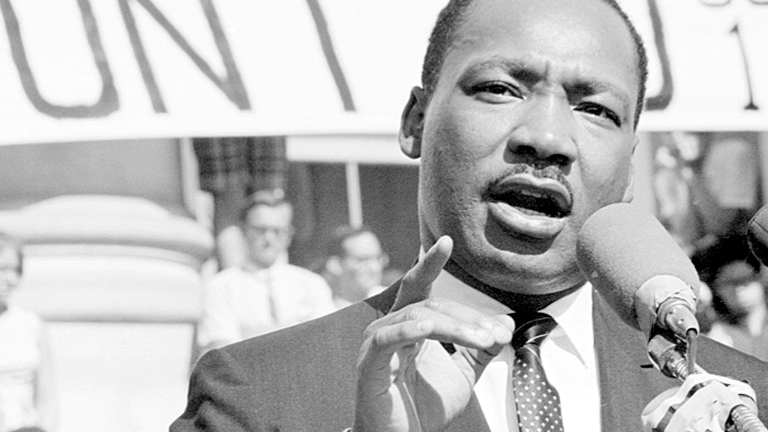
Because, as Martin Luther King once said, “We may have come on different ships, but we’re in the same boat now.”
We must do this together in every town, every city and every county across our state. If you are ready to join that fight with me in the next two years as you have in the last two years, we will be here two years from now looking at a state that once again is a leader for a rejuvenated America.
If you are willing to join that fight, so am I – on your behalf. That is what you elected me to do. And that is the solemn commitment I make to you again today.
Thank you, God bless you, God bless America and God bless the great State of New Jersey
Posted: January 17th, 2012 | Author: admin | Filed under: Chris Christie | Tags: Chris Christie, State of the State | 3 Comments »
The newspaper industry is fighting to keep its outdated government subsidy, costing taxpayers tens of millions of dollars a year.
By John Bendel
All across New Jersey, governments and school districts are slashing costs to meet the enormous financial challenges they face. Police officers and firefighters are being laid off, road and highway improvements delayed, and funding for snowstorms and other emergencies curtailed. Nearly everyone has been caught up in the statewide budgetary storm of reduced services and higher taxes.
Yet one industry is fighting to remain immune from the hard financial decisions being made by each and every town and school district in the state. Using their editorial pages and considerable clout, New Jersey’s newspapers have put their own financial interests ahead of the taxpayers, including their own readers, by opposing legislation that would save money and make government more open and accountable. This legislation would give governments the option to publish legal notices online rather than in newspapers, as they’ve been mandated to do by law for decades. The change being fought so aggressively by the newspapers not only would save taxpayer dollars, but give hundreds of thousands more citizens access to the information – and in a more easily accessible way.
Using the public’s “right to know” as cover, the newspaper industry in New Jersey is fighting to preserve its own monopoly – a monopoly that’s being subsidized by upwards of $30 million a year in taxpayers’ money. The New Jersey Press Association and its member news organizations across the state are trying to hold onto the kind of no-bid contract they routinely condemn.
Last year, we saw New Jersey’s newspaper industry elbowing for space on Trenton’s Lobby Row to save their slice of the government pie. They lined the halls of the Statehouse – lobbying legislators in a bid to influence the process not for the public good, but for their own economic gain. They became just another special interest. And while they were busy arm-twisting legislators who will vote on the issue, they were using their editorial pages to intimidate those same legislators.
The bill was to be posted again for a vote last week, but Assembly Speaker Sheila Oliver apparently succumbed to newspaper pressure and pulled it at the last minute.
A core principle of newspapers is never to confuse their editorial opinions and news content with their companies’ economic interests. In this case, that line has been crossed. And the newspaper publishers and editors crossed that divide in the interest of propping up a practice that is an anachronism in the modern world of the Internet. The law granting newspapers this particular monopoly was passed during the age of typewriters. It makes no sense whatsoever to preserve that law in the Internet era.
It’s especially disingenuous for the newspaper lobby to be stubbornly fighting the posting of legal ads online at the very time those newspapers are admonishing governments to post more information – everything from salaries to contracts to marriage licenses – on the Internet, on government websites already up and running. Recently the Bergen Record, Courier-Post and The Press of Atlantic City all ran editorials calling on governments to offer more documents and records online to benefit the public. Could it be that the newspaper industry is interested in transparency only when it doesn’t affect its own financial interests? You be the judge.
The benefits of allowing the posting of legal notices online are indisputable.
First, it greatly expands a notice’s exposure to the public, giving citizens greater, cheaper and more convenient access to legal notices. And the information would be available 24-7, in Spanish as well as English, in more easily readable form.
Second, the cost savings are clear. The state, county and local governments would post the legal ads on their existing websites, a simple process requiring no added expense; in fact, the scanning procedure is so easy it’s familiar to grammar-school students. Newspaper executives argue that the costs to taxpayers for running the legals in their publications have been overestimated since the private sector pays for some of the ads -liquor license applications, sheriff sales, and certain land-use matters for example. Why should the private sector fork over millions to newspapers when they could run the ads at no cost on government web sites?
Finally, while individual citizens must pay 75 cents to $1 to buy a newspaper – and much more on Sundays – they could access the same information online, at little or no cost. The fact is, online posting would save governments, individuals and businesses the millions of dollars they spend each year to pay whatever publishers charge for placing a legal ad in their newspapers.
Earlier this year in the Borough of Island Heights where I live, mandated legal ads cost the borough approximately $4,000. This is no small amount of money for a town struggling to make ends meet.
The newspaper lobby would have you believe that the proposed change would be harmful to those who do not use the Internet, especially seniors. Give me a break. The number of people using the Internet has exploded over the last decade – to the point where those who go online to learn the latest news, weather, sports scores and other information far outnumber those who buy newspapers. Going online has become second nature to a vast majority of Americans – including my fellow seniors.
By way of review, New Jersey laws mandate that individuals, businesses and government entities pay to publish legal notices in officially-designated newspapers. The New Jersey Legislature is considering amending the law to allow for publication of those legal notices on official state, county and municipal web sites in addition to, or instead of, traditional newspaper advertising. Technological advances and the growing abundance of government information online demonstrate the benefits of broad dissemination of legal notices on the Internet as an alternative to traditional newspaper publication. Amending the law to allow the option of posting legal notices on a web site enables residents throughout the state to view any kind of legal notice from any part of the state. Far more New Jersey residents have access to information available on the web than to any one newspaper designated to publish legal notices. While traditional newspapers were the only logical means of ensuring public access to information in the past, today any resident can gain Internet access either at home, through their jobs, at any public library, in most public schools, and at community centers and Internet cafes.
Newspaper publication imposes time constraints on the availability of legal notices that web site posting would not. For example, the law requiring publication of a legal notice of a proposed toll hike might only mandate that the notice appear for a certain number of days in one or more designated official newspaper. Because web sites have far greater capacities than a single print edition of a newspaper, the same legal notice could remain posted on official state, county and municipal websites for several months or more, allowing residents greater opportunity to find and view the information. Instead of being subjected to the painstaking process of going through individual back copies of a newspaper, a resident could go to a single web site to find the legal notice they are looking for.
Official web sites can be designed to allow flexibility in sorting and searching for legal notices. Those web sites could be required to provide users the ability to search for legal notices by date posted, the appropriate county or other geographic category, or the subject of the posting. A person who prefers searching for postings by scanning pages of newspapers would retain that option, while someone searching for a fairly specific posting – such as applications for liquor licenses in December, 2003 only – could search for and view only the relevant notices.
Amending the law to expand the available avenues for publishing legal notices affords governments, businesses and individuals a virtually free method of publishing notices that they have to pay for under the current system. Such a proposal will not limit access to newspapers or restrict anyone from continuing to publish legal notices in newspapers. Instead, it offers far greater flexibility in posting legal notices and increases the public’s access — at a vastly reduced cost for everyone.
John Bendel is an Island Heights, N.J. councilman, president of Bendel & Bendel Inc., and former editorial page editor of the North Jersey Herald News.
Posted: January 16th, 2012 | Author: admin | Filed under: Media, New Jersey, NJ Media | Tags: John Bendel, Legal Advertising, Newspaper Industry | 3 Comments »

 The dean of the Monmouth County legislative delegation is running for United States Senate.